
COUNTRY PROFILE & TRAVEL TIPS ON TANZANIA IN EAST AFRICA
Learn More On AfricanMecca Safari Tier Ratings & Experiences
READ MORE ON TRAVEL GUIDE FOR TANZANIARead More Information About Tanzania As An East African Country
Tanzania is an incomparable location for your authentic safari in Africa while exploring the culture, wildlife and landscape of the northern, western, eastern and southern parts of the country. With 364,945 square miles (945,203 square kilometers) of terrestrial and aquatic wilderness, Tanzania is the largest nation-state in East Africa and offers you a diversity of experiences, whether you want to see wildlife, learn about native peoples or uncover human history in its vast lands.
Located just south of the equator, the country shares borders with Kenya and Uganda to the north; Democratic Republic of the Congo, Burundi and Rwanda to the west and Zambia, Malawi and Mozambique to the south. On the eastern border is almost 500 miles (800 square kilometers) of the Indian Ocean coastline along with its proprietorship of the islands of Zanzibar, Pemba and Mafia.
With a rich volcanic history, Tanzania has many distinctive geological features that support flora and fauna unlike any other in the world. At the center of the country is the Great Rift Valley, home to Ngorongoro Crater. To the north is the mighty Mount Kilimanjaro, a massive peak that entices the most adventurous explorers to ascend its 19340-feet elevation (5895 meters), with Mount Meru and Ol Doinyo Lengai nearby and close to the border of Kenya respectively, or further west are the mountains of Mahale where wild chimpanzee live.
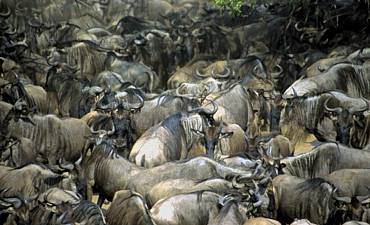
Just west of these highlands northern giants is the internationally-renowned Serengeti National Park, the site of the world's Greatest Migration of wildebeest and zebra, and your Tanzania exploratory safari gives you the chance to see this spectacular demonstration of instinctual survival firsthand. An extensive system of national parks, protected areas and archeological sites await you in Tanzania!
Olduvai Gorge in the Ngorongoro Conservation Area is where fossils of some of the earliest humans were discovered by the Leakey’s. For Eden-like wildlife experiences, choose from Ngorongoro Crater, a 20-mile wide caldera with breathtaking scenery and an almost unimaginable concentration of animals, or over 21,000 square miles (55,000 square kilometers) Selous Game Reserve, the largest game reserve in Africa.
If you prefer lake settings in Tanzania, choose from Lake Victoria in the northwest, the largest lake in Africa and world’s largest tropical lake, and Lake Tanganyika, the longest and second deepest freshwater lake in the world. Other lakes in Tanzania include Lake Manyara, Lake Nyasa (also known as Malawi), Lake Eyasi and Lake Natron. The lakes offer a more leisurely pace of discovering the natural beauty of Africa with activities such as walking and boating safaris where you discover hidden waterfalls, hundreds of bird species and expansive views from high plateaus.
No matter where you travel in the East African country of Tanzania, you are always welcomed by friendly citizens who openly share their cultures and ancient traditions. As you visit local villages, you learn about many of the community projects that not only support the villages economically, but also work to preserve the teachings and beliefs of each tribe's ancestors, a difficult challenge in a modern world.
Historically, the native cultures of Tanzania have been influenced by Bantu settlers from southern and western Africa, as well as Arabs, Portuguese, Germans and British, and today there are 120 African ethnic groups in the country. With so many groups in the country, it may seem that communicating with the locals is impossible, but Tanzanians proudly speak Kiswahili as well as their native and national language.
As you culturally tour in Tanzania, you may have the once-in-a-lifetime opportunity to meet some of the native peoples. The largest group is the Sukuma people in northwest Tanzania near Lake Victoria, a people who live from fishing, cotton farming and cattle herding. The northern section of the country is dominated by the Maasai. Known as "fierce warriors," the Maasai have been granted access to many of Tanzania's protected areas for grazing of their prized cattle, animals that lend to a Maasai's social status and wealth. Also in northern Tanzania are the Hadza, hunter-gatherers, and just north of the Maasai steppe on the slopes of Mount Kilimanjaro are the Chagga people.
When you are in the northern-central highlands of Mbulu, visit the Iraqw, a peaceful tribe of farmers and herders whose native language is not only demanding to learn, but it is also valued as a way to protect the tribe from the influence of modern society. On the coast of the Makonde plateau are the Makonde, an insulated tribe that creates beautiful, intricate ebony wood carvings.
Located in western Tanzania, are the Nyamwezi, or "Persons of the Moon," traders who now practice agriculture, and to the northwest of this tribe on the shores of Lake Victoria are the Haya, coffee and tea farmers whose women are well-known for their handicrafts. The other tribe is the Waha people who live in western Tanzania close to Kigoma. Two other tribes in Tanzania are the Gogo near Dodoma and Hehe in the highlands of the Iringa District.
For more than 10,000 yesteryears, we humans have inhabited the lands that are now known as Tanzania. The earliest peoples were hunters and gathers, and agriculture and herding have only been used in the area for the last 3,000 to 5,000 years. Trading with Greece started on the Swahili coast in 400 BC, leading to the settlement of coastal towns and settlements by Bantu-speaking people, as well as Arabs and Persians who traded tusker ivory, native slaves, spices gold, silver and perfume.
Trade with China was significant between the 13th and 15th centuries, at the height of the Kilwa Kisiwani, Bagamoyo and Zanzibar Archipelago civilizations, and the area's population became a blend of Indian, Arab and African people.
By 1525, the region was dominated by the Portuguese, but by the 19th century, the Germans and the British presence increased significantly, which ultimately brought a decline in the slave trade due to the slavery abolition laws introduced in the west and lack of demand. Your Tanzania historic tour reveals the country's long journey to independence through many significant historical events, such as the Maji Maji rebellion from 1905 to 1907.
During World War I, the realm was under German control, but after the war, the country came under British protectorate. In 1964, the nations of Tanganyika and Zanzibar fused together as the United Republic of Tanzania. Visiting the country's historic sites gives you an unparalleled insight into the challenges faced by its people.
Near the Unguja village of Mangapwani in Zanzibar is a natural cavern and man-made cave that was once used for slaves, and the Mbweni Palace Ruins were once the site of a hiding place for rescued slaves. The Maruhubi Palace Ruins once served as the grand estate of Sultan Barghash, and you can still see the pillars and aqueducts. The Old Boma Museum in Arusha displays exhibits of the country's pre-colonial period, as well as various influences of foreign rule.
Also in Arusha, the Declaration Museum where you learn about the country's struggle for independence, and in the Mara Musoma region, the Mwalimu Julius Kambarage Nyerere Museum also tells the story of the country's greatest leaders, who lead the country to freedom from the German and British authority. Other Tanzania museums for your culture holidays in Africa are Arusha Cultural Heritage Center, Maasai Cultural Museum, and in Dar es Salaam, the National Museum and House of Culture.
Accounting for 85% of exports, 80% of employment and 7% of governmental spending, agriculture is the primary economic support for Tanzania. The state is the world's largest supplier of sisal and cloves, and also produces coffee, tea, cashew nuts, cotton, tobacco and varied minerals, and 75% of all products are exported.
With a few manufacturing and processing facilities, Tanzania has a significant reliance on the global market to import goods, such as machinery, construction materials, transport equipment, textiles, clothing, fertilizer, medications, chemicals, petroleum products and food. The government maintains control over much of the country's infrastructure, such as telecommunications, banking, energy and mining.
Banking reforms in the country have lead to an increase in the private sector growth and investment, and over 48% of all banking assets are foreign owned. The Tanzanian government also owns all of the country's land, which may be leased for up to 99 years. Global interest in the success of Tanzania's economy has increased in recent years, though, resulting in a Millennium Challenge Compact Grant in 2008 and 2012 to support economic growth.
Despite these challenges, Tanzania as a country has managed to thrive during a worldwide recession, showing a 6% increase in Gross Domestic Product from 2009 to 2012, thanks in part to the steady growth of the gold industry, as well as tourism, which is a critical part of the economy, accounting for approximately 16% of the Gross Domestic Product.
Many of the country's natural resources are protected, and visitors from around the world seek the vast wildernesses and high diversity of animals for their dream vacations in Tanzania. Tourism dollars not only support the country on the whole, but also local communities. Much of the income supports community projects that aim to preserve the ancient traditions of the native peoples.
You may learn about some of these programs when you visit the city of Arusha during your culture trip of northern Tanzania, such as Dumbe Chad, Engaresero, Osotwa, Longido, Themi Valley and many others. These programs not only give you the opportunity to visit the villages, but also to engage in hands-on activities, such as beading, herding, farming, meal preparation and traditional dances.
Like so much of Tanzania's history, the political system is deeply rooted in evolution and change. In 1926, a system of local government began with the introduction of the Native Authorities Ordinance, and the system remained in place until 1972 when it was replaced by a direct central government. In the 1980s, though, the local government system was revived, resulting in the establishment of rural councils and authorities and the first local government elections were held in 1983. One year later, in 1984, fully functioning rural councils were established.
Historically, Tanzania had a single-party political system, and this did not change until 1993 when a multi-party political system was established. Two years later, in 1995, the first multi-party elections were held in the country. Shortly after, the country experienced reform within the public sector, as decentralization was introduced in the political, financial and administrative systems.
During your rural and urban travels of Tanzania, you may see some of the many indications that local government reform continues to be an ongoing process for the country. The country of Tanzania began as two independent countries -- Tanganyika and Zanzibar. Tanganyika became a sovereign state on December 9, 1961, and a republic in 1962. Zanzibar became a sovereign state on December 10, 1963 and a republic on January 12, 1964. On April 26, 1964, the two states joined and became the United Republic of Tanzania.
Today, Tanzania's government consists of the Union Government and the Zanzibar Revolutionary Government, and the country's president is elected through a democratic process. Since gaining independence, the country has had a number of presidents -- Julius Nyerere, one of Africa's greatest leaders who lead the way to independence, followed by Ali Hassan Mwinyi, Benjamin Mkapa and Jakaya Kikwete.
Once elected, the president appoints a vice president and prime minister who serve as the government leaders of the National Assembly. The president then selects members of the National Assembly to serve as his cabinet.
Understanding the best ways to get to Tanzania is an important part of planning your tour of Africa. Your choice of airline and airport can either make your trip easier or cause you the extra complications of changing flights or traveling by road. Tanzania has three international airports for your convenience.
Dar es Salaam manages most of the country's international flights for those visiting the commercial city, southern parks and eastern beaches, but you must choose Kilimanjaro International Airport for your start of your northern Tanzania safaris or Zanzibar International Airport for your seaside and cultural Swahili tour, depending on your travel itinerary. You may also choose to fly into Nairobi and then transfer via a regional flight or travel by road to reach Arusha.
The primary airlines that service Tanzania are Turkish, Emirates, Qatar, Egypt, Ethiopian, South African and Kenya Airways, and all of these airlines require connecting flights via its in-country capital hub. International flights from Europe arrive and depart daily from Dar es Salaam International Airport e.g. KLM from Schiphol and Air France from Paris. There are no direct flights from the United States or Canada, so the best choices of airlines are from the Delta's SkyTeam Alliance Partners.
If you are traveling from Australia, South African Airlines takes you to Johannesburg where you can find a connecting flight to Dar es Salaam International Airport. No direct flights are available from Asia, and your airline options include Emirates, Qatar and Egypt. While in Africa, you may need to fly between cities, and Kenya Airways is the primary inter-continental airline, and services all three international airports in Tanzania.
If you are traveling by road to Tanzania, there is a route from the north and one from the south. The road from the north is tarmacked and extends from Nairobi to Arusha. Shuttle buses travel between the two cities twice each day, and the one-way trip takes about seven to eight hours. The road from the south begins in Malawi and ends in Mbeya.
There are limited bus services from the south, so if you choose to drive yourself, avoid driving at night. Be cautious of other drivers, especially trucks and buses along the route, as many drive quite aggressively along the route. There is also bus service along the east coast of Tanzania, between Dar es Salaam and Mombasa with a transit stopover in Tanga.
For your visit in Tanzania, you must meet certain entry requirements before being allowed into the country. Some nationals are exempted from this requirement when entering the country and staying for three months or less. Read More
When you arrive in Tanzania for your tour, your AfricanMecca customer care officer will assist you with your luggage once you exit the arrivals section and introduce you to your safari guide or transfer driver for your onward journey. As a general rule, you should pack light for your wildlife safari in Tanzania as there is a maximum weight allowance of 15 kg (33 pounds) per passenger on safari aircrafts for your logistical park transfers and also on mountain climbs.
Any additional luggage should be locked and left at your Arusha, Dar es Salaam or Zanzibar accommodation front desk or at one of the AfricanMecca team offices until you come back. Upon your return, your luggage will be handed back to you. Additionally, to save on expenses, you should check out of your hotel room to avoid any lodging costs while your room is unoccupied for the night during your travels to other regions.
Bringing the right clothing and personal items on your Tanzania safari not only keeps you safe and comfortable, but also increases your enjoyment of the many adventurous activities available during your travels. Read More
Ensuring your personal safety while in Tanzania requires you to follow many of the same practices that you use elsewhere while traveling internationally. The best way to protect yourself is to minimize the risks for someone causing you harm. You should not wear expensive jewelry, and it is wise to leave these types of items at home. Protect your valuables, such as handbags, cameras and wallets in crowded areas. Additionally, avoid dark and abandoned streets and alleys. When venturing out at night time, hire a transfer service via AfricanMecca or a regulated, insured and proper tourist taxi.
Credit cards are a much more secure way to pay your expenses while in the cities of Tanzania, but should you need to carry cash, there are some general guidelines that you should follow. Safe deposit boxes are available in hotels, and you should store your valuables and extra cash in these boxes at all times. Use multiple security envelopes, and never leave your cash unattended or in unsealed, unsecured envelopes. Always count your cash before you place it in the safe deposit box and when you retrieve it. Keep a record of how much money you have spent and how much you have with you.
Political rallies, demonstrations and other public gatherings happen around the world, and AfricanMecca is committed to ensuring that these activities do not interfere with your travel or safety. Your AfricanMecca representative will advise you about any of these activities that may take place during your safari or tour, and if you are traveling or touring independently, you should avoid areas where these activities are scheduled or happening.
While in Tanzania, remain aware of your surroundings at all times and watch for any security concerns. You may request the assistance of an AfricanMecca customer care officer 24 hours a day and 7 days a week for any emergency situations.
Although not mandatory, tipping is an admirable way to share your satisfaction with your guide and varied staff service you will receive while in Tanzania. Read More
The East African climate in Tanzania is perfect for your safari and beach vacation all year round with no extreme temperature changes. The temperate to tropical temperatures means that you are comfy during your bush drives and other excursions. Read More
Tanzania has a well-developed system for domestic and international telephone and fax services. International direct dial is available in most major cities. For remote lodgings that do not offer these services, you may have access to mobile services or even radio links for relaying messages as needed. Mobile services in Tanzania use GSM and, if desired, your AfricanMecca tour representative can assist you with purchasing a compatible but inexpensive mobile device and local SIM card in Arusha, Dar es Salaam or Zanzibar.
Mail service in Tanzania is fair compared to other parts of the world, with a delivery time of 7 to 14 days to Europe, Asia, the Middle East and North America. Internet access via your smart phone or at internet cafes is available in all major cities and a rising number of smaller cities. Business centers and public Wi-Fi services are also available in many city hotels, beach resorts as well as an increasing number of camps and lodges in Tanzania.
Although, you will come across international cuisine at urban destinations and also during your safari in national parks in Tanzania, sampling some of the local dishes immerses you in the cultural experience that the country can splendidly offer. Meat is a luxury component of the diet for the common Tanzanians; though so will find “Nyama Choma” on many menus in the restaurants and accommodations.
Nyama Choma is roasted beef or goat served with a coastal relish like kachumbari, a combination of white or red onions, red or green chili, lemon or lime juice and tomato. The main staple dish is typically Ugali, a type of soft porridge made out of cornmeal.
Swahili cuisine is also served in the east coast of Tanzania and consists of heavenly curries made with coconut milk served with aromatic steamed rice, chicken (kuku paka) grilled fish (samaki paka), other seafood and supplemented with starters like kheema chapati (mincemeat flat bread), samosas, mandazi etc. Street vendors also offer their own specialty foods, such as grilled mishkaki or gajar chicken with chips, roasted cassava and corn on the cob with lemon and chili topping, madafu (coconut water), kitale (baby coconut) with spicy potatoes.
You will find a much greater variety and higher quality of food in larger cities, and you must take the time to have the fresh Swahili coastal food of Zanzibar Island. No matter where you are in Tanzania, special dietary requirements can be accommodated if you make arrangements prior to your arrival. While dining in Tanzania, you will notice that the pace is much more relaxed. This allows you to not only enjoy the food, but to also engage in delightful conversations.
Some items, such as personal effects, laptops and cameras, are allowed to be brought into Tanzania temporarily free of duty, but you must not sell these items while in the country. On arrival, the customs official may note these items on your passport for verification upon your departure. You should always keep your baggage locked at all times and always keep your keys easily accessible, as your baggage may be opened and inspected upon arrival and before departure. Should you want to bring firearms into Tanzania, you will need to obtain a special permit before arrival.
International travel often means that you are eating and drinking local favorites that may not agree with your digestive system. To avoid any unpleasant adjustments of drinking water in Tanzania, you should only consume bottled or proper boiled water, which is provided in all reputable accommodations. Where possible, you should purchase bottled water in a major city or town area before departing on your Tanzania road safari as bottled water in lodges and camps can be quite expensive due to its remoteness. Carrying a small supply of bottled water is generally not possible on a fly in safari as there is a restriction on maximal luggage allowance.
Electricity in Tanzania is primarily provided through main power and generators that produce power of 240 volts AC 50 cycles. Some of the larger hotels and lodges offer shaving points with 110 volts 50 cycles. As you prepare for your bush and beach holiday in Tanzania, you should bring the British three-pin (rectangular) adapters or a multi-pin converter, especially if you are traveling from North America or mainland Europe. Some smaller lodgings do not allow the use of personal appliances, such as hairdryers while some lodgings provide these items for you.
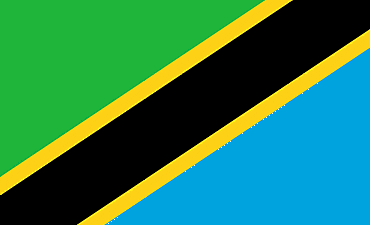
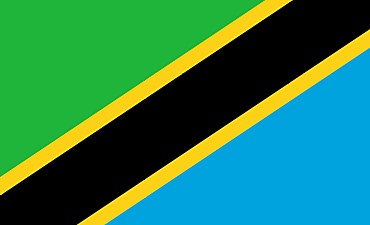
The flag of Tanzania was approved on June 30, 1964, to represent the union of Zanzibar and Tanganyika. A black diagonal band runs from the lower left to the upper right corner, representing the people of Tanzania. This band is edged with yellow to represent the country's mineral wealth. The agriculture and fertile land is reflected in the upper green triangle, and the Indian Ocean is symbolized by the lower diagonal blue triangle.
Below is a list of the public holiday dates for Tanzania. The observances of public holidays in Tanzania may affect some of your activities especially in the cities where government operated museums are closed. Also, there are three other holiday dates that are dependent on the lunar calendar. The dates of these holidays are based on the Islamic Lunar calendar and vary from year to year by an eleven-day annual reduction in comparison to the Gregorian calendar. Eid al-Fitr marks the end of Ramadan. The next holiday is Eid al-Adha, or "Feast of Sacrifice" based on Abraham’s attempted sacrifice of Ishmael. The birth of the Prophet Mohammad – the Maulidi holiday is widely celebrated too.
National Holidays
New Year's Day – 1st January
Zanzibar Revolution Day – 12th January
Karume Day – 7th April
Good Friday – In March or April
Easter Monday – In March or April
Union Day – 26th April
Labour Day – 1st May
Saba Saba Day – 7th July
Nane Nane Day – 8th August
Nyerere Day – 14th October
Independence Day – 9th December
Christmas Day – 25th December
Boxing Day – 26th December
Lunar Public Holidays
Eid al-Fitr – at the end of Ramadan
Eid al-Adha – 10th day of Dhul Hijjah
Maulidi – 12th day of Rabi Awwal
You will find that the medical and health services in Tanzania are only fairly adequate in Dar es Salaam for both the quality of the facilities and the quality of care that you receive. The descent hospitals in the country are Aga Khan Hospital, AMI Hospital, Hindu Mandal Hospital, AAR Health Services (Out Patient Only), all of which are in Dar es Salaam. Health care in Tanzania and generally in Africa is very expensive so ensure you appropriate medical travel insurance coverage for in-country care and international evacuation.
To ensure your health while in Tanzania, you should be properly vaccinated prior to arrival. A yellow fever vaccination is generally required for entry into the country with a valid vaccination certificate. Although not required, a cholera vaccination is recommended. You should also check with your local health department or the Center for Disease Control to determine your risk for hepatitis while in Tanzania. Malaria poses a serious health risk. Prophylactic drugs are highly recommended and you may obtain these prescriptions from your personal physician or local health department.
Your personal health insurance may not cover any medical services that you need while in Tanzania; therefore, comprehensive travel insurance is recommended. You should verify your coverage and determine any limitations in your coverage prior to arrival, such as medical evacuation, out of country or continent hospitalizations. The hospital may also require that you pay for their services upfront and then get reimbursed by your insurance provider. Most medical providers in Tanzania require cash payment when services are rendered and these services are very expensive, making in-country healthcare very challenging for uninsured travelers.
As part of AfricanMecca terms of conditions of your travel in Africa, you are required to obtain travel insurance for your safety and convenience. Your travel insurance should have 100% coverage for ground and air travel, medical emergencies, flight/baggage delays and other unforeseen circumstances or events. You should only purchase travel insurance from a reputable and licensed insurance company directly, and you may choose from some of the providers used by other AfricanMecca clients – details at https://www.ustia.org.
Upon request, AfricanMecca can assist you with getting in touch with the insurers based on your travel requirements. You will be required to make all premium payments and claims request through your chosen travel insurance provider. Your personal wellness is of utmost importance to our team staff and guides.
Be sure to bring adequate prescription medications with you to last beyond the duration of your travels. Although there are pharmacies available in the cities, having your prescription filled in-country can be a long process with a possibility of not having your specific medicine available in Tanzania. You should also bring adequate amounts of any over-the-counter medications you use or may need, such as those for allergies and minor ailments. Sun protection is absolutely vital in Tanzania as you will be outdoors in most locations.
At a minimum, you should bring sunscreen, a wide-brimmed hat, sunglasses, long-sleeved shirts and long pants. Lastly, while in Tanzania, avoid any sexual contact with people that you do not know, as HIV is a problem in the country as it is around the world.
Tanzania uses the British Metric System, so you may need to convert measurements during your travels in Tanzania. Kilograms (kg) are used in place of pounds and 1 kilogram equals approximately 2.2 pounds. Kilometers (km) are used instead of miles and 1 kilometer is a little more 0.62 miles.
At one time, the news and media in Tanzania was largely state-owned, but the introduction of a multi-party system has brought some diversity to these industries, although government-owned media outlets tend to be biased toward the ruling party. Television in rural Tanzania is not as widespread as other parts of the developed world, but the medium is slowly replacing radio as the primary source of information.
While you travel in Africa, you have access to local as well as international media outlets, such as the BBC and Voice of America. Government-owned press includes Tanzania's oldest newspaper, the Daily News, as well as Habari Leo. Privately-owned newspaper and other print sources include The Guardian and several sources in Kiswahili, such as Tanzania Daima, Alasiri and others.
State-run television programming is broadcast via the Tanzania Broadcasting Corporation (TBC), which also offers radio programming. Private television programming is offered through the popular Independent Television (ITV), as well as Star TV and Dar es Salaam Television (DTV) that is operated by the Africa Media Group. Radio programming is offered through the state-run Tanzania Broadcasting Corporation (TBC) and Voice of Tanzania-Zanzibar, as well as privately-owned Radio Free Africa and Radio One.
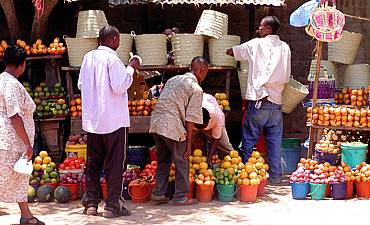
When you include shopping outings on your urban and rural tour of Tanzania, you not only have the opportunity to purchase handcrafted souvenirs and exquisite pieces of art, but you also spend time with the local artisans and villagers who gain personal satisfaction from sharing their trades and traditions. When you shop in rural craft markets, you should try to buy directly from the artists who personally created the wide range of items that are available, such as Makonde carvings, handwoven baskets, wildlife and cultural paintings and Maasai beaded jewelry.
Generally, bargaining is recommended if you feel prices are high, although the prices at urban boutique shops tend to be fixed and always high, but the products are of consistent excellent quality and some are unique too. Throughout Tanzania, you will find striking textiles that are worn by the local peoples. The women wear brightly colored shoulder and waist garments known as "kanga," including full dresses called kitenge while the men wear "kikoy" around their waist. The kitenge fabrics used for these traditional garments are also used for pajamas, beach shirts, cushion covers, bags and many other items.
In northern Tanzania, you will find markets filled with Maasai items, such as iconic red-checkered blanket, ornamented milk gourd, cattle skin shield, spears and beaded necklace. Woven mats (mkeka) are also hand-crafted by some tribes, such as those made by the sisal and palm craftswomen of the east coast. Zanzibar has long been recognized as a location for spectacular old times, vintage-like dishes and Omani wooden chests with copper ornate. In Dar es Salam, you could buy the unique Tinga Tinga paintings that depict the culture, wildlife and iconic destinations of Tanzania. Tanzanites are best purchased in Arusha, and only from licensed curio shops and jewelers.
Some city accommodations in Tanzania have designated rooms set aside for travelers who smoke. When you arrange your city trip to Tanzania, you may request this type of room if desired and available. Safari camps, lodges and beach resorts do not have such designated smoking tents or rooms so it is recommended you smoke at the designated smoking zones. As a courtesy to those around you, prior to smoking in public areas, you should ask permission from those around you or only smoke at designated smoking spots. Smoking is not allowed on game drives and other safari activities. We also do not recommend you smoke in your tent or lodge room as a courtesy as the sleeping chamber is also used by non-smokers and children.
Travelers with special needs may find that public areas in Tanzania have limited accessibility features when compared to other developed locations in the world, as these facilities are generally limited to the international airports and some accommodations. If you have special needs, your AfricanMecca tour representative can arrange your lodgings and activities to meet your special or disability needs and we may request additional support from the hotel staff if needed.
Knowing the local time in Tanzania ensures that you are on time for your flights and safari activities. Tanzania is three hours ahead of Greenwich Mean Time (London time) and eight hours ahead of New York. Daylight savings time is not used in Tanzania.
Traveling pets are welcome in Tanzania, but you need to obtain the proper airport and aircraft clearance permit and meet all health requirements. There is a fee for the permit, and you should get prior pet acceptance authorizations from all your accommodations accordingly, as only a handful of lodgings allow pets. Your AfricanMecca tour planner can assist with tailoring your travel to include pet-friendly lodgings.
While credit cards are increasingly accepted in major hotels in key cities like Dar es Salaam, Arusha and Zanzibar, you may want to use cash during your travels. You should expect to pay a high bank fee for credit card use in Tanzania. If you need banking services during your vacation in Tanzania, you should use one of the major banks found in larger cities or the branch banks in smaller towns.
You may bring international currency such as US Dollars (widely preferred), Euros, British Pounds into Tanzania, but you need to use a bank or authorized money bureau to exchange your cash for Tanzania shillings although an increasing number of transactions in city hotels are done in US Dollars due to the stagnation and devaluation of the local currency. Banks are generally open from 0900 to 1500 hours. Monday through Friday. Some city banks have limited working hours on Saturdays while the banks and exchange bureaus in the airports have longer hours.
CONTACT AND TALK TO OUR SAFARI EXPERTS TODAY TO KICK-START YOUR TOUR PLANNING PROCESS
Request Tanzania Custom Or Tailor-Made Safari Pricing Based On Your Specific Travel Dates At Your Preferred Safari Tier Camp Or Lodge
CONTACT AN EXPERT ON TANZANIA SAFARI PRICES & TOURS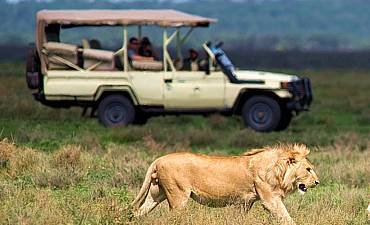
Read More +
SAFARI PRICES FOR TANZANIA
Review Tanzania detailed itineraries and prices of our recommended safaris with the option of customizing your Africa tour based on your preferences and needs.
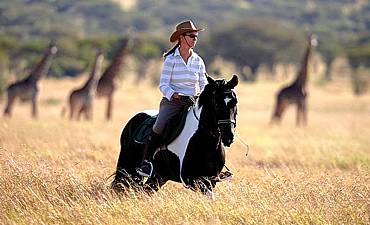
Read More +
AFRICA TRIP IDEAS FOR TANZANIA
Review experiences available in Tanzania from photo wildlife safari, chimpanzee tour, bush walk, family to honeymoon beach vacation, snorkeling, diving etc.
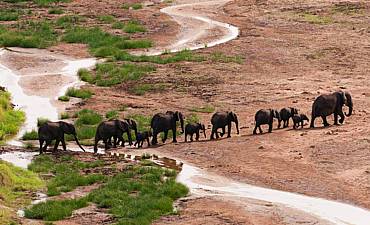
Read More +
PARKS & RESERVES IN TANZANIA
Review information on wildlife parks and reserves in Tanzania i.e. Serengeti, Ngorongoro, Tarangire, Ruaha, Manyara, Selous, Katavi Gombe, Mahale and more.
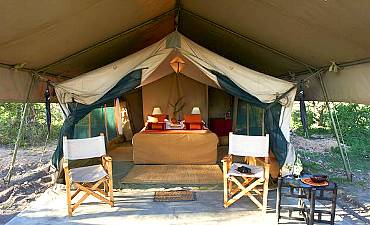
Read More +
ACCOMMODATIONS IN TANZANIA
Review information on safari camps, lodges, city hotels, beachfront resorts in Tanzania's pristine wilderness, cities, Swahili coastal shores and idyllic islands.
Read More +
BEST TIME TO VISIT TANZANIA
Review details on the best time to go to Tanzania to visit its various wildlife outback, lakes, rivers, beaches, islands, mountains, forests and other wildernesses.
Read More +
BEACHES & ISLANDS OF TANZANIA
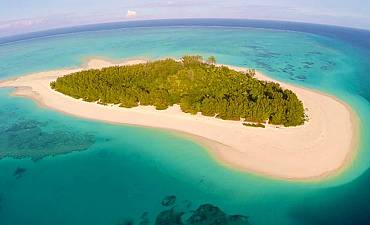
Review Tanzania's unspoiled white, sandy coastal beaches and idyllic islands backed by tropical forests that are lapped by the azure waters of the Indian Ocean.
Read More +
TANZANIA COUNTRY PROFILE
Review country information and travel tips on Tanzania i.e. climate, history, geography, culture, entry requirements, what to pack and wear, tipping guide and more.
Read More +
CITY DAY TOURS FOR TANZANIA
Review city tour recommendations on full or half day options in Dar es Salaam, Arusha, Zanzibar. Experiences can be customized around your vacation travels.
Read More +
AFRICAN SAFARI PRICES
Check out safari prices and itineraries for parks and reserves in other African countries e.g. Kenya, Uganda, Rwanda, Botswana, South Africa, Zambia etc. Namibia, Mozambique, Malawi and Zimbabwe are available on request.
AFRICANMECCA REVIEWS
What are our Customers saying about us? READ MORE REVIEWS
AfricanMecca's professionalism and care understands that what distinguishes Africa is its authenticity, the land, people and wildlife who do not share our world of fashion and fanfare that distinguish so many travel companies today.
Cyril Christo & Marie Wilkinson, Conservation Photographers, Authors & Wildlife Documentary Producers - USA
Jambo Raza, We all had a fantastic time on our Tanzania safari. Accommodations were excellent and we loved our guide - Rodgers. We will definitely recommend this safari to others. Thanks for all your help making the arrangements.
Dr Thomas Davis, Methodist Hospital, Minnesota, United States
AfricanMecca Safaris created a remarkable honeymoon tailored to our interests and desires. The quality of service and delivery of experience was unsurpassed. I highly recommend AfricanMecca Safaris to honeymooners, families, or any traveler.
Noorin & Jason Nelson - Maryland, United States
Thanks again to you for arranging a wonderful trip for us. Everything was great from the fantastic wildlife, the scenery, the people, the accommodations and the food. The safari was everything we had hoped for.
Liz and Gunnar Kristiansen - Ontario, Canada
I booked my safari holiday through AfricanMecca. They were the most helpful company I have ever dealt with and I work within the travel industry. I had the most amazing time. The holiday went as clockwork with no hitches anywhere.
Shelley Roberts - Hemel Hempstead, United Kingdom
We have returned from our African adventure and would like to thank you very much for your part in making this such a wonderful experience. We were lucky enough to time the Great Migration from the Serengeti, which was amazing.
Denise Paterson - Belmont, Australia
We had an absolutely amazing trip in Arusha, Serengeti and Gombe - everything went smooth as silk. Thank you so much Raza for making this trip, the trip of a lifetime. We had an absolutely brilliant time.
Tiffany Heitz & Lesley Smith - California, United States
EAST AFRICA SAFARI BOOKING & TOUR HOLIDAY IDEA TANZANIA
When visiting Tanzania, we recommend combining your safari to Serengeti for the wildebeest migration, Ngorongoro Crater, Lake Manyara, and Tarangire. You can also climb the highest mountain in Africa: Mount Kilimanjaro.
You may optionally extend out to other wilderness areas of Nyerere, Ruaha, Katavi, Rubondo (Lake Victoria), or Mahale - Gombe for chimpanzee safari.
You can end your vacation at the Indian Ocean for a beach vacation and Swahili cultural tour on the exotic spice islands of Zanzibar, Pemba, Mafia or Fanjove.
Best Safari Planning Ideas & Trip Experiences For Tanzania
Below are guide references on how to plan each of the below safari experience in Tanzania. Alternatively, go to the summary section for a quick overview of each trip planning experience.1. How To Plan Tanzania Safari Trips? (Summary)
2. Wildlife Safari Trip Planning Guide For Tanzania
3. Private & Tailor-Made Safaris Trip Planning Guide For Tanzania
4. Honeymoon Safaris Trip Planning Guide For Tanzania
5. Family Safaris Trip Planning Guide For Tanzania
6. Luxury Safaris Trip Planning Guide For Tanzania
7. Photo Safaris Trip Planning Guide For Tanzania
8. Cultural Safaris Trip Planning Guide For Tanzania
9. Chimpanzees Safaris Trip Planning Guide For Tanzania
10. Hike, Trek & Bush Walk Safaris Trip Planning Guide For Tanzania
11. Birding Safaris Trip Planning Guide For Tanzania
12. Horseback Riding Safaris Trip Planning Guide For Tanzania
13. Balloon Safaris Trip Planning Guide For Tanzania
14. Wedding Safaris Trip Planning Guide For Tanzania
15. Bush & Beach Safaris Trip Planning Guide For Tanzania
READ MORETRAVEL PLANNING GUIDE FOR TANZANIA
Kickstart Your Safari Planning


ARE YOU PLANNING TO BOOK AN AFRICAN SAFARI TO TANZANIA?
Do You Need Knowledgeable, Experienced & Specialist Guidance For Your Travels In Tanzania? Let Us Help Plan Your Trip Itinerary Correctly
CONTACT A TANZANIA VACATION EXPERTEXPLORE MORE ON NATIONAL PARKS, CAMPS, LODGES, BEACHES & RESORTS IN TANZANIA


HAVE YOU VISITED EASTERN AFRICA FOR A SAFARI IN TANZANIA?
Write A Travel Or Tourist Trip Review To Share Your Experiences
WRITE TANZANIA TRIP REVIEW









AMS BLOG
VIEW ALL - 24 December 2024 by AfricanMecca Safaris, in Blog For AfricanMecca Safaris,Safari Planning Blog Posts - AfricanMecca Safaris
What AfricanMecca Accomplished In 2024
What AfricanMecca Accomplished In 2024 Published By AfricanMecca Safaris | Blog ...READ MORE +- 26 October 2017 by AfricanMecca Safaris, in Blog For AfricanMecca Safaris,Safari Planning Blog Posts - AfricanMecca Safaris
Baggage Guidance, Flight Shuttle Service & Restrictions On Flying Safaris In Africa
Baggage Guidance, Flight Shuttle Service & Restrictions On Flying Safaris In...READ MORE + - 07 June 2017 by AfricanMecca Safaris, in Blog For AfricanMecca Safaris,Latest Kenya Blog Posts From AfricanMecca Safaris,Safari Planning Blog Posts - AfricanMecca Safaris
Masai Mara Horseback Riding Safari In Kenya With AfricanMecca
Masai Mara Horseback Riding Safari In Kenya Published By AfricanMecca Safaris | ...READ MORE +